
One technology. Three applications.
OSORA provides bone healing simulation technology for fracture management, education and training, and implant development.
Explore all threeApplications
OSsistant Fracture Management
In development
Patient-specific decision support from treatment planning to rehabilitation.
Case Review Studio
Available for courses
Explore fracture biomechanics through virtual case discussions based on clinical examples.
Implant Development
Project-based collaboration
Compare implant designs, fixation configurations and loading scenarios with in silico studies.
OSsistant Fracture Management
In development
See how today’s treatment decisions may shape tomorrow’s healing.
OSsistant brings patient information and bone-healing simulation into a single fracture-management workflow. It is designed to help clinicians compare treatment strategies, understand the expected healing trajectory and plan rehabilitation and follow-up around the individual patient.
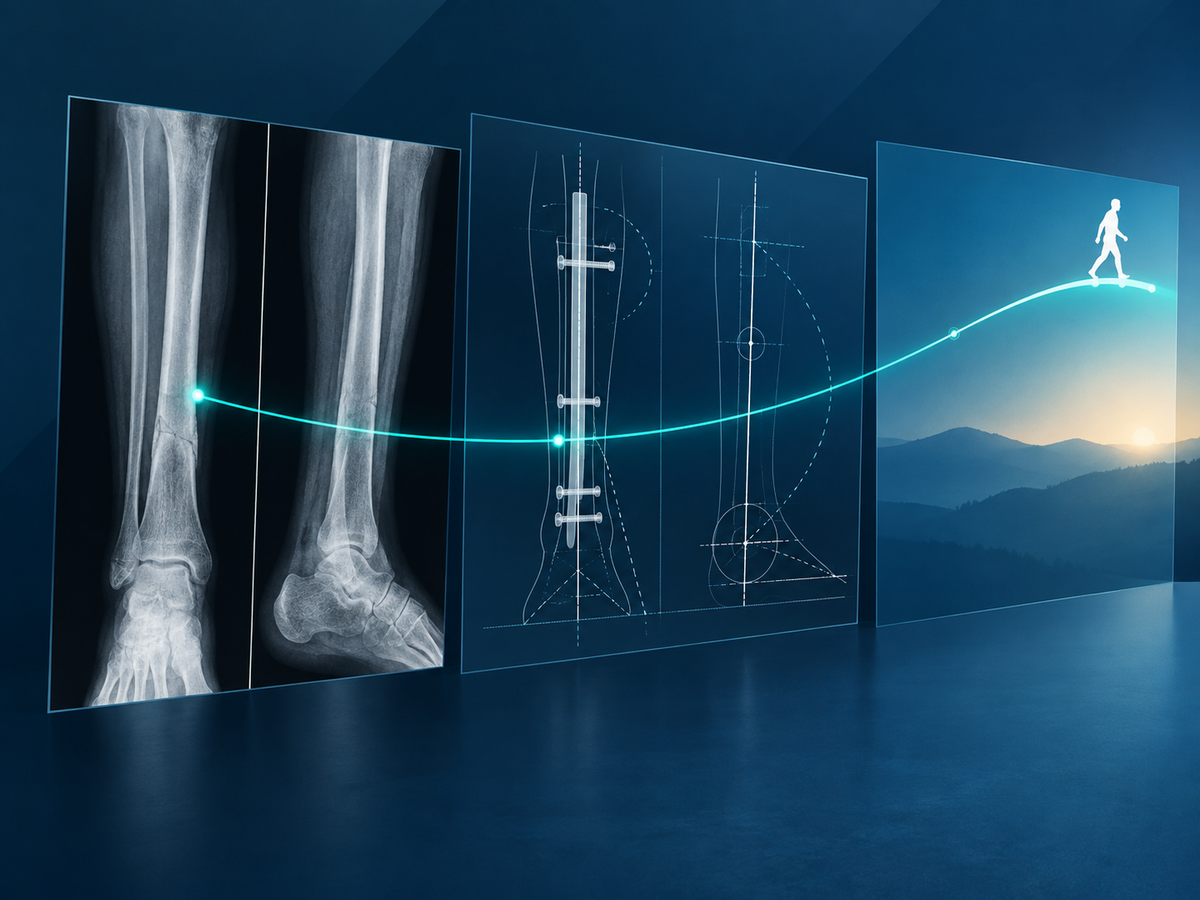
Compare treatment strategies in the context of healing
Review patient and fracture information, explore fixation and loading configurations, and compare how they may influence stability, implant loading and tissue development over time. The result is not another static snapshot, but a patient-specific view of the healing process.
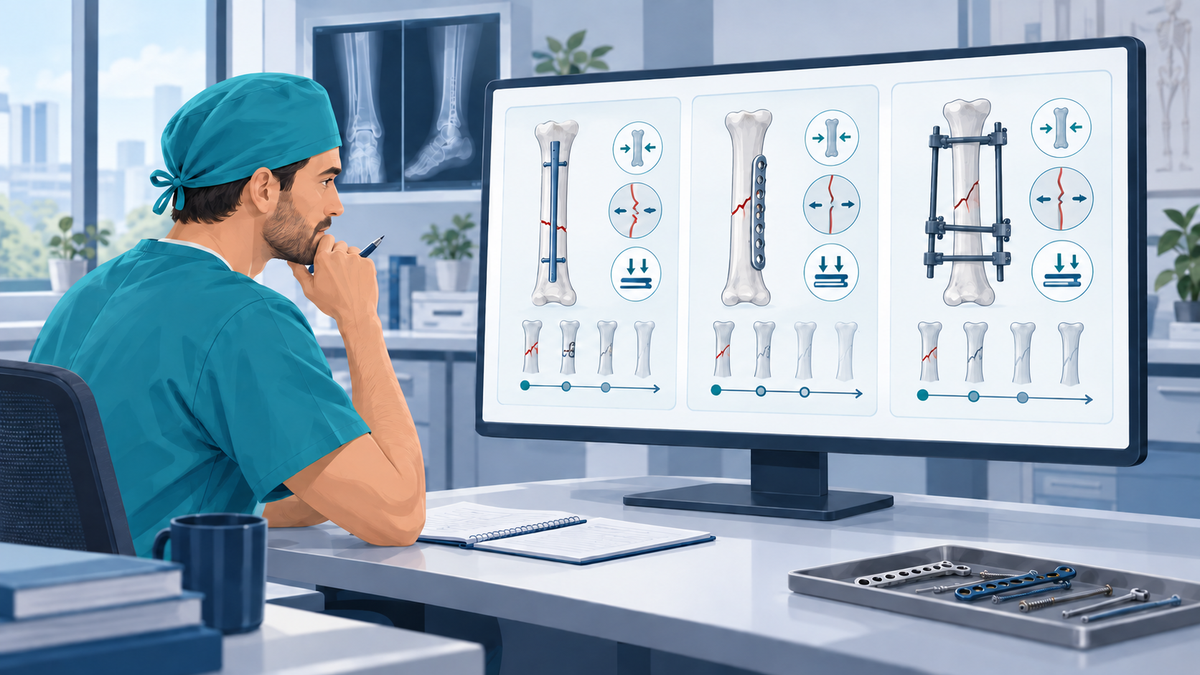
- 1
Understand the individual case
Bring together the fracture, patient factors, planned fixation and loading conditions to create a patient-specific view of healing.
- 2
Compare treatment strategies
Explore alternative fixation and loading configurations and compare how they may influence stability, implant loading and tissue development over time.
- 3
Plan the next step
Use transparent healing forecasts to support planning, rehabilitation and follow-up as new patient information becomes available.
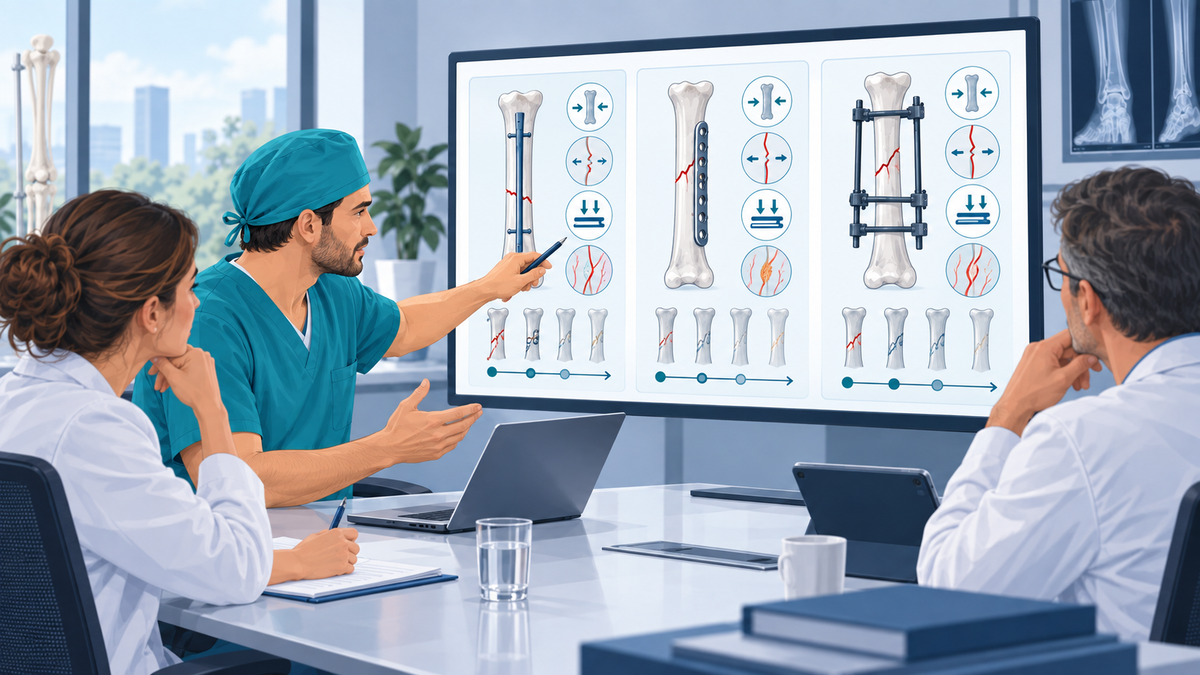
Turn simulation results into a clearer planning discussion
OSsistant presents relevant forecasts side by side — from construct stability and interfragmentary movement to implant stress and expected healing milestones. This gives the clinical team a transparent basis for discussing trade-offs, while the treatment decision remains with the clinician.
See the expected healing trajectory
Review relevant indicators such as construct stability, interfragmentary movement, implant stress and expected healing milestones in context.
Keep clinical judgment in control
OSsistant helps the clinical team discuss trade-offs and identify questions that warrant closer attention. The treatment decision remains with the clinician.
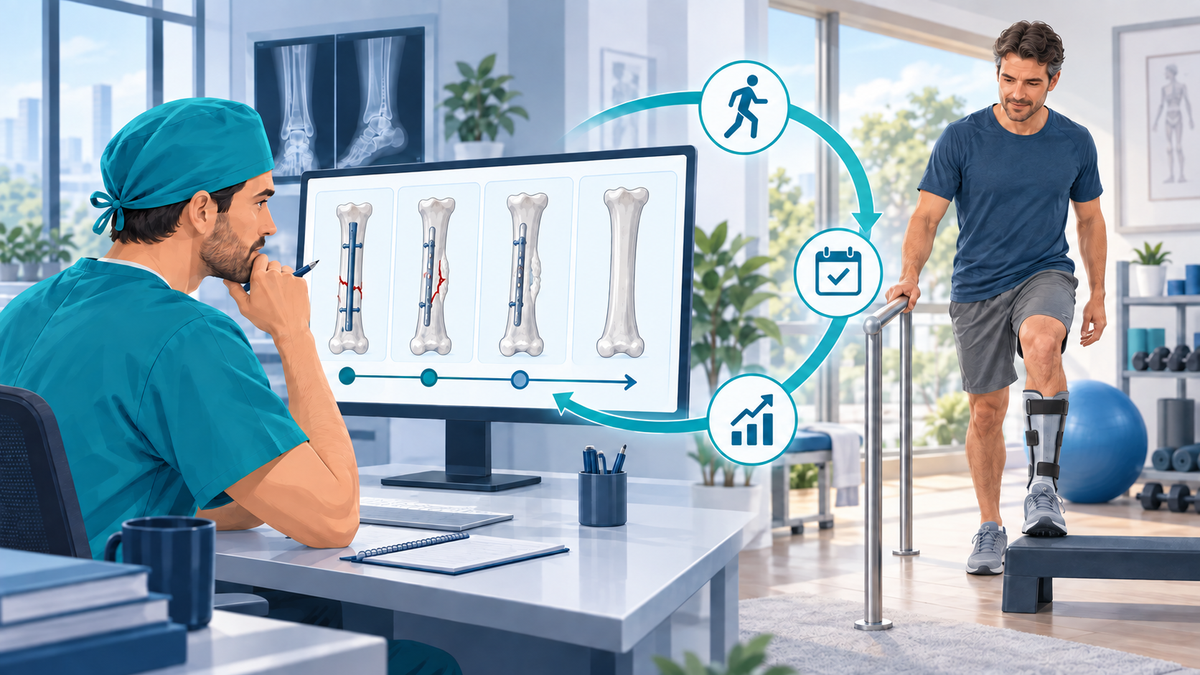
Connect treatment planning with rehabilitation and follow-up
The same healing model is intended to support decisions after surgery: how much load may be appropriate, when progress should be reviewed and where a deviation from the expected trajectory may warrant closer attention. As new patient information becomes available, the forecast can be updated.
Built with clinicians. Open to development partners.
We are developing OSsistant with clinical input and are looking for partners to validate workflows, data integration and clinical value. The underlying simulation technology is already used in research and education.
Good to know
What is OSsistant?
OSsistant is a clinical decision-support system in development. It is designed to connect patient information with bone-healing simulation in a single fracture-management workflow.
How is OSsistant intended to support clinicians?
It is intended to help clinicians compare treatment strategies, understand the expected healing trajectory and plan rehabilitation and follow-up around the individual patient.
Is OSsistant available for clinical use?
No. OSsistant is currently in development and is not available for clinical use.
Are you looking for development partners?
Yes. We are looking for clinical and technology partners to help validate workflows, data integration and clinical value.
Case Review Studio
Available for courses
Biomechanics makes sense when you can see it.
Case Review Studio turns clinical cases into interactive case discussions. Participants compare treatment and loading variants, follow their simulated mechanical and biological consequences over time, and relate the findings to clinical evidence.
One clinical case. Three layers of understanding.
The nail-diameter case follows one femoral shaft fracture from the clinical question through the comparison of two intramedullary nails to the interpretation of simulated healing.
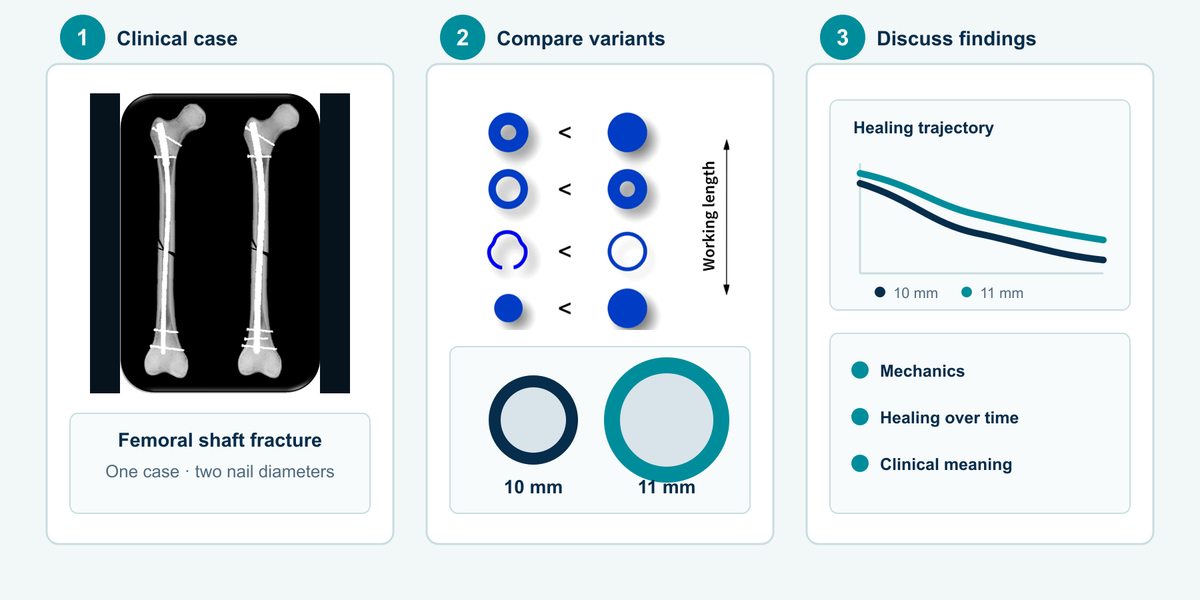
- 1
Frame the clinical question
Start with the fracture, patient context, imaging and learning objective. In this case: how might nail diameter influence the mechanical environment of healing?
- 2
Compare what changes
Compare the 10 mm and 11 mm nail, follow interfragmentary movement and consolidation over time, and examine how one changed parameter affects the simulated result.
- 3
Turn results into takeaways
Interpret the differences, question model assumptions and connect the findings with fixation principles, clinical evidence and the treatment discussion.
Learn by comparing — not by memorising.
Case Review Studio turns biomechanical principles into questions that can be explored together. Participants can test ideas on virtual cases and make the reasoning behind different strategies visible.
- 01
Explore safely, off the patient
Change one factor at a time and discuss possible consequences without affecting patient care.
- 02
See healing develop over time
Move beyond a static image and follow simulated mechanics and tissue development across the healing trajectory.
- 03
Discuss trade-offs, not predetermined answers
Use differences between variants to ask better questions and make assumptions explicit.
- 04
Connect simulation with clinical evidence
Relate the simulated case to fixation principles, literature and the experience in the room.
From fundamentals to advanced case discussions
Teaching blocks can be assembled around a single question or combined into a larger course sequence.
- 01
Bone-healing fundamentals
Primary and secondary healing, fracture-gap size, mechanical environment and load sharing.
- 02
Fixation principles
Nail diameter, intramedullary nailing, plate osteosynthesis, screw configurations and locking strategies.
- 03
Clinical challenges
Femoral and tibial shaft fractures, periarticular fractures, difficult healing situations and weight-bearing protocols.
For your course. At your level.
Use one case discussion, a thematic teaching block, a workshop or a series of sessions.
For instructors
Choose the learning objective, clinical focus and level of depth. We help select or adapt suitable cases and integrate them into your course format.
For participants
Compare alternatives, follow simulated healing over time and turn the observed differences into a structured clinical discussion.
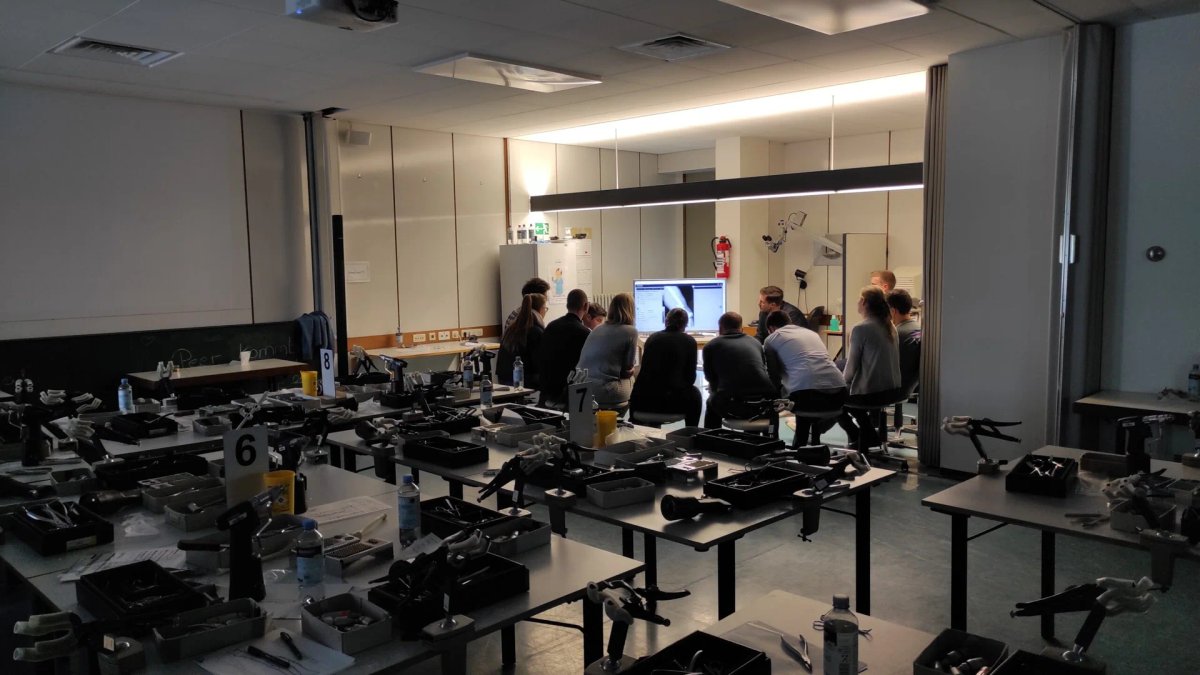
Good to know
Which topics and cases are currently available?
Available cases cover bone-healing fundamentals, fixation principles and selected clinical challenges. We choose a suitable set for the learning objectives and level of your course.
Can a case be adapted to our course?
Yes. Depending on the objective, we can adapt the emphasis, comparison variants, supporting material and depth of discussion.
Do participants need individual accounts?
That depends on the course format. We clarify access, accounts and technical requirements during preparation.
What course formats are possible?
A single case discussion, a thematic teaching block, a workshop or a series of sessions can be combined with your existing curriculum.
Does the simulation provide treatment recommendations?
No. Case Review Studio supports education and discussion. Simulation results depend on the model and its assumptions and do not constitute an individual treatment recommendation.
Implant Development
Project-based collaboration
Understand how an implant performs as bone heals.
Compare implant concepts across fracture, patient and loading conditions — and follow how stability, load sharing and implant stress develop as healing progresses.
Why healing changes the design question
Implant performance is not defined by a single load case. As callus forms and tissue stiffness increases, load is redistributed between the implant and the healing bone. OSORA simulations make this changing mechanical environment visible.
Compare designs over the complete healing trajectory
Evaluate implant concepts in a controlled study that follows the mechanics of fixation and healing over time.
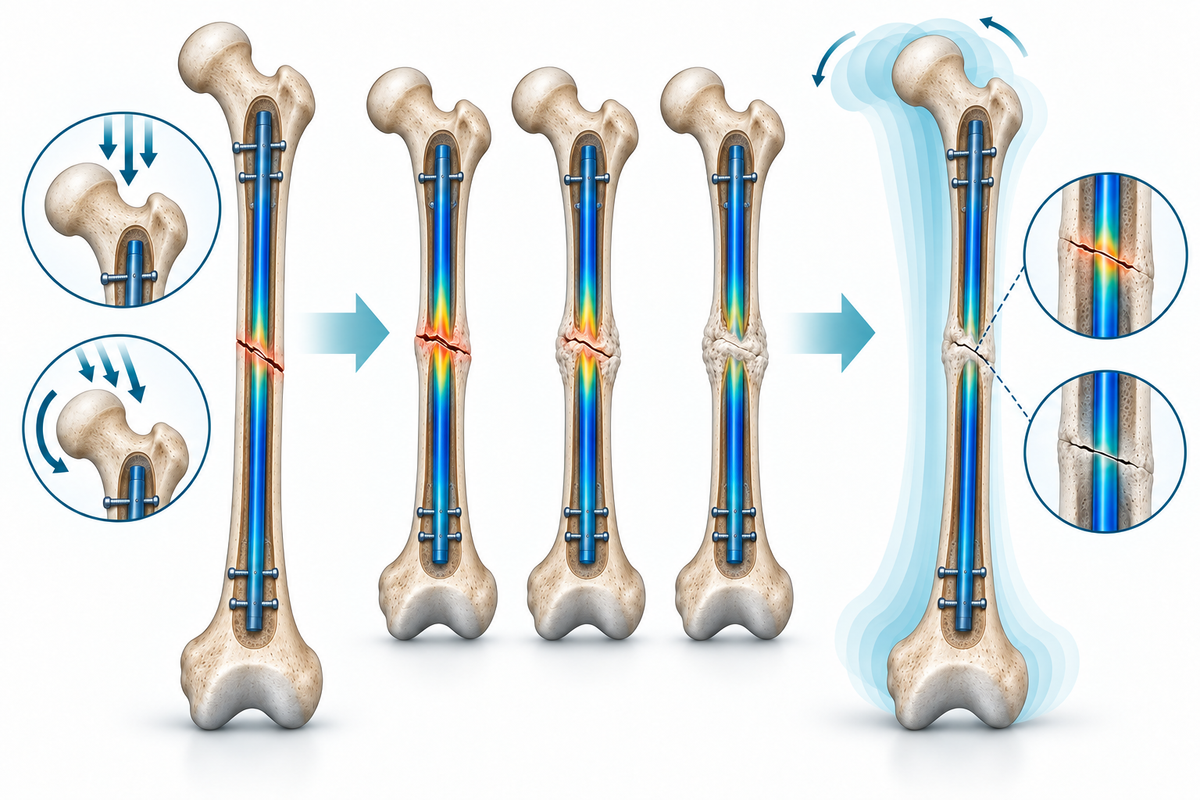
- 1
Define the comparison
Implant geometry, material, fixation, fracture and loading conditions.
- 2
Follow healing and load sharing
Stability, interfragmentary movement, tissue development and implant loading over time.
- 3
Evaluate robustness and risk
Sensitivity to patient, fracture and loading assumptions; identification of critical configurations and time periods.
From development question to robust evidence
Each study is designed around the implant, the available evidence and the decision the development team needs to make.
Test more than the nominal case
A design that performs well in one nominal configuration may respond differently to variations in fracture geometry, patient biology or loading. In silico studies allow these factors to be varied systematically and help identify which assumptions have the greatest influence on the result.
A study designed around your development question
Together we define the comparison, input data, boundary conditions and relevant outcome measures. The study provides traceable model assumptions, controlled variant comparisons, sensitivity results and a joint interpretation in the context of experimental and clinical evidence.
Adapted to different implants and research questions
Our public research examples include long-bone fracture fixation and a proof of concept for bone remodelling around dental implants, developed with Technische Hochschule Ulm. The suitability of the approach, model scope and available evidence are assessed for each project.
Good to know
What information is needed to start a study?
We start with the development question, comparison variants and available geometry, material, fixation and loading information. Together we define which patient, fracture and healing assumptions are relevant.
Which implant and healing outcomes can be compared?
Depending on the study, outcomes may include construct stability, interfragmentary movement, implant stress, load sharing, tissue development and expected healing milestones.
How does an in silico study complement experimental testing?
The simulation provides controlled comparisons and sensitivity analyses. It complements — rather than replaces — bench testing, preclinical work and clinical evidence.
Can the approach be adapted to implants outside long-bone fracture fixation?
Yes, when the biological and mechanical question can be represented with suitable data and model assumptions. Feasibility and scope are assessed before each project.