OSORA

General

“An astronaut with broken bones?” – why bone healing simulations in space applications can be useful in down- & upstream scenarios

“An astronaut with broken bones?” – why bone healing simulations in space applications can be useful in down- & upstream scenarios When we first began exploring the use cases of bone healing simulations in a space context, we encountered a consistent set of questions: “When and how exactly is an astronaut supposed to break a […]

“An astronaut with broken bones?” – why bone healing simulations in space applications can be useful in down- & upstream scenarios Read More »

Introducing OSsistant

Introducing OSsistant Why OSORA exists: surgical planning in orthopaedic & trauma care needs a new approach Helping patients regain mobility after musculoskeletal injuries remains a major clinical challenge. While more therapeutic options are available than ever before, the pace at which state-of-the-art technology is transforming medical care continues to accelerate. At OSORA, we took a

Introducing OSsistant Read More »

Proof-of-concept simulation of bone remodeling with dental implants

Proof-of-concept simulation of bone remodeling in dental implants: Institute for Medical Technology and Mechatronics at Ulm University of Applied Sciences (THU) uses OSORA simulation software When placing dental implants in patients with periodontally compromised dentition, the risk of complications, bone loss, and implant failure is increased compared to healthy patients (Sgolastra et al., 2015). In the

Proof-of-concept simulation of bone remodeling with dental implants Read More »

Effects of weight-bearing scenarios on bone healing can be revealed by OSORA simulations

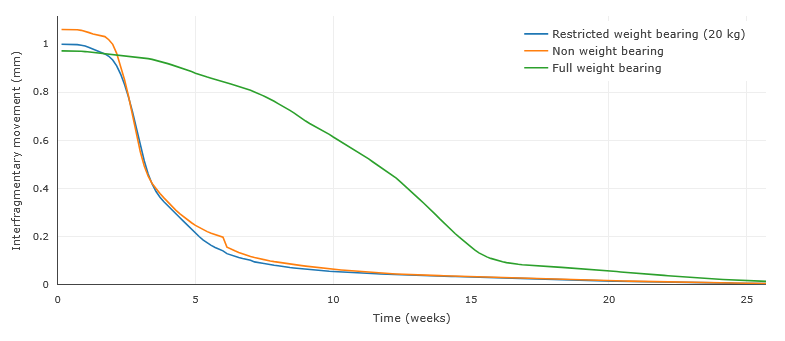
Effects of weight-bearing scenarios on bone healing can be revealed by OSORA simulations Problem After fracture treatment, determining how much weight a patient can safely place on the healing bone is often a major challenge. Standardized guidelines or “pain-adapted” load-bearing approaches rarely reflect the unique healing capacity of each individual: Patients need to understand how

Effects of weight-bearing scenarios on bone healing can be revealed by OSORA simulations Read More »

Award winning thesis for Yannick Schindler on the simulation of the healing of tibial fractures​

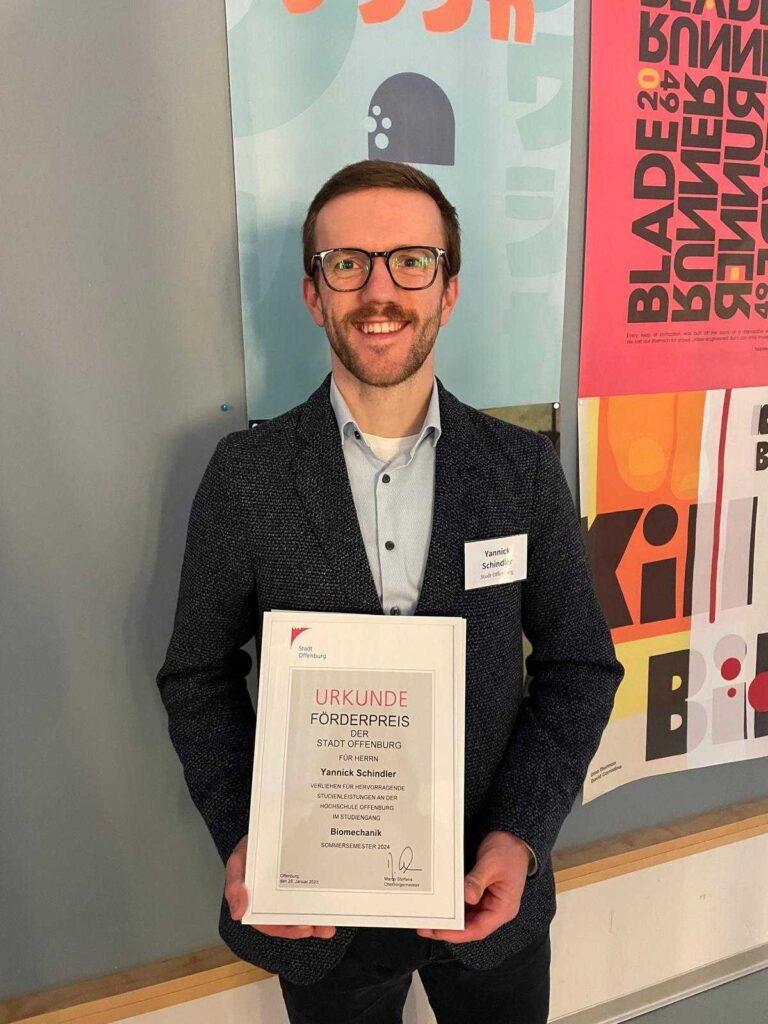
“Influence of loading on the healing behavior of surgically treated tibial fractures” The topic of Yannick’s thesis  shows his dedication to biomechanics and is the climax of his Bachelor of Engineering degree. The award was presented at the academic anniversary celebration and award ceremony at Offenburg University of Applied Sciences. Yannick developed a novel loading

Award winning thesis for Yannick Schindler on the simulation of the healing of tibial fractures​ Read More »

Build, learn, innovate: Open internships & thesis projects at OSORA

Build, learn, innovate: Open jobs, internships & thesis projects at OSORA At OSORA, we’re bridging the gap between numerical simulation, AI and clinical care by building a cloud-based simulation platform that predicts whether and how bone fractures heal for individual patients. Our work empowers surgeons to make data-driven decisions—and now, we’re looking for computer science

Build, learn, innovate: Open internships & thesis projects at OSORA Read More »

What is a digital twin for orthopedics and trauma surgery?​

Ensuring safe and effective treatment of bone defects is the top priority for clinicians. However, treating musculoskeletal disorders is increasingly complex due to the diverse characteristics of patients. Aging and diseases such as osteoporosis may impair bone regeneration, while young patients and children exhibit significantly accelerated healing progress. Advancements in technology and data accessibility offer

What is a digital twin for orthopedics and trauma surgery?​ Read More »

Five reasons why OSORA boosts mechano-biological bone healing simulation with AI

After almost 25 years of basic research in biomechanics, in 2022 we built a proof of concept of our idea of a clinical bone fracture management software with our clinical colleagues from the University Hospital Ulm. In our recent project together with a group of BG Clinics, we moved into tibial fractures and a substantially

Five reasons why OSORA boosts mechano-biological bone healing simulation with AI Read More »

Early detection of pseudarthrosis – supplementing clinical expertise with predictive analytics

Is it possible to predict uncomplicated bone healing and the development of pseudarthrosis on the basis of the accident pictures, the clinical information at the time of the accident and the first treatment pictures? Together with a consortium of the BG clinics of Ludwigshafen, Tübingen, Murnau and Duisburg, OSORA is going to work on the

Early detection of pseudarthrosis – supplementing clinical expertise with predictive analytics Read More »

Augmented reality in fracture care education – Lessons learned from the latest OSORA pilot deployment

At the 41st AO Trauma Blended Course in Halle we tested a novel teaching concept for assistant doctors, developed together with apl. Prof. Dr. Thomas Mendel of the BG Clinic Bergmannstrost. With a total of 122 participants, 26 instructors and spanning three days, the event brought a whole new set of challenges for OSORA. One

Augmented reality in fracture care education – Lessons learned from the latest OSORA pilot deployment Read More »

Scroll to Top